
West Bengal, a state full of exotic natural wealth, is also home to immense cultural wealth in the form of built heritage, folk forms, handicrafts, festivals, theatre, and fine arts. However, traditional tourism has primarily focused on either natural destinations like hill stations, beaches, and the Sunderbans, or the built heritage in Bankura, Bishnupur, and Murshidabad along with Tagore’s Shantiniketan. But there is so much of its unique cultural offerings that remains to be explored!
I used to work in rural Bengal for a social enterprise, banglanatak dot com, extensively between 2002 and 2012, for community organizing and social development. Never did I realize then, that my work will teach me to see the state eventually in a new light of cultural splendor! Recently, I went back to experience this organization’s work on cultural tourism that they had started about a decade back, primarily focusing on bringing about sustainable livelihood and dignity of work through professionalization of traditional cultural practices. I travelled across the districts of Bardhaman, Birbhum, Bankura, Purulia and West Midnapore, covering about 920 kms in three days, crossing the rivers Damodar, Kangsaboti, Ajoy, and Rupnarayan along the way!
The places I visited were villages of artisans and small handicraft cottage industries, hamlets of diverse folk art and artists, all of which have now become vibrant spaces for tourists. I had once seen these hamlets and communities marginalized, unknown and isolated, their art and craft forms dying and suffering devaluation and decline, their skills and creativity fading into poverty. Over the last decade, banglanatak dot com has been able to create income, social dignity, community pride and unity through various programmes and has institutionalized village tourism and festivals led by local communities.
The time of the year was also just right to travel. With the onset of spring, the air was fresh, and there were fall colours all around in shades of red, brown and yellow with occassional dabs of the seasonal flowers Palash and Shimul in bright red and orange. The excellent highways were spotted with dhabas offering local specialities! Bardhaman, Bankura and Birbhum were places of the red soil, Purulia was rugged with the Dalma and Ayodhya ranges and Midnapore was lush green with rice fields, all interspersed with rivers and streams. What specially added to this beauty were the people and their unique skills, their stories and their lives.


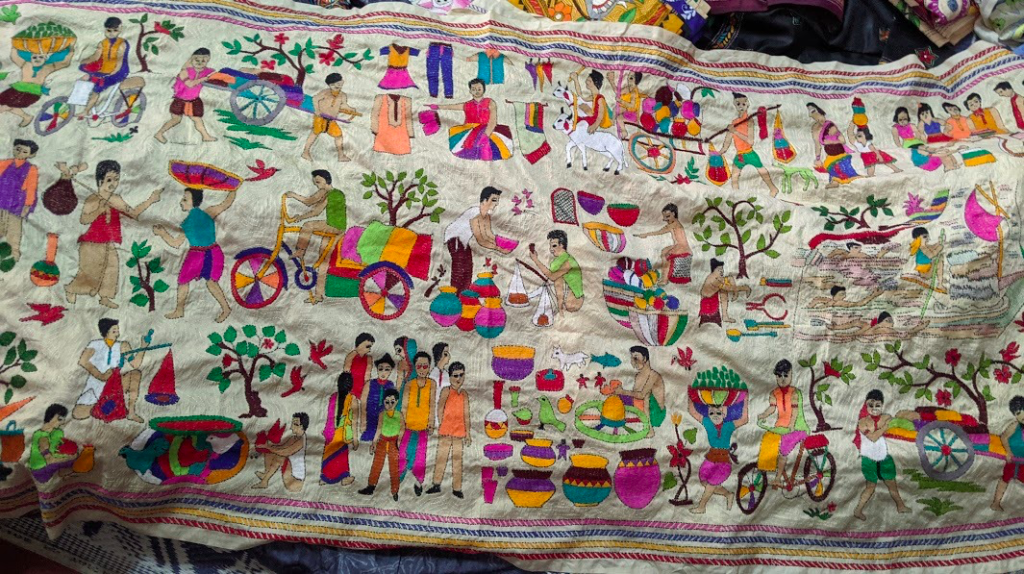
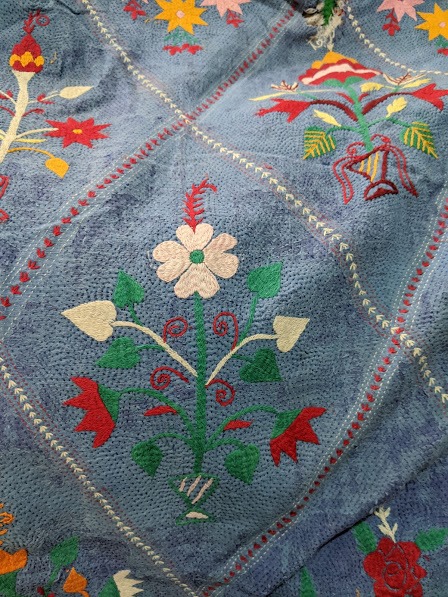
We first stopped at the kantha work cluster in Nanoor (Birbhum) where Muslim women embroiders, once confined to their homes with no possibility of economic independence, have today become small entrepreneurs. About 100 women entrepreneurs provide work to about 600 women in the villages. One can visit their homes, see how they work, interact with them and also purchase or order products, which can even be done through WhatsApp once the contacts are established. We saw old nakshi kanthas, about 80 years old, as well as modern kanthas depicting stories of village life.
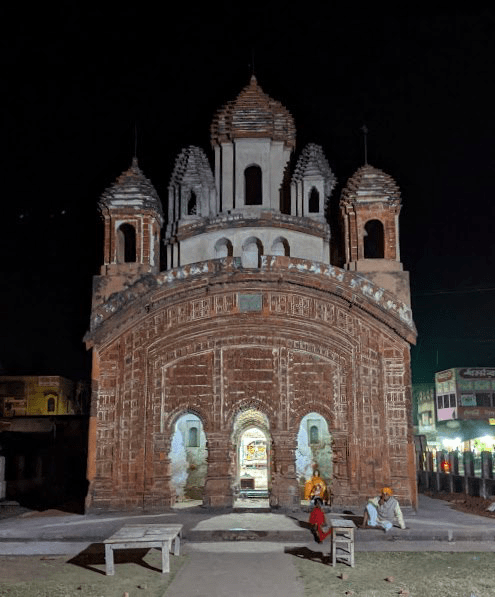
En route from Nanoor to Tepantar, an eco-tourism village in East Bardhaman, was the beautiful Joydeb terracotta temple around which a Baul festival takes place in January. Tepantar, set up on a 4 acre green campus, developed and run by local youth members of a theatre group “Ebong Amra”, was a completely different experience. The campus is full of trees with simple huts (with attached bath) for stay, and a small pond where I was told sometimes people fish. It also has a Blackbox theatre arena, a square space with black walls inside and a stark look, especially made for creative use of lights in performances. In the evening, the group holds rehearsals in this space that one can watch. Tepantar was inspiring for its simplicity and is a place to be for anyone who wishes to break away from the city life briefly. It also hosts festivals of various kinds during specific times of the year.

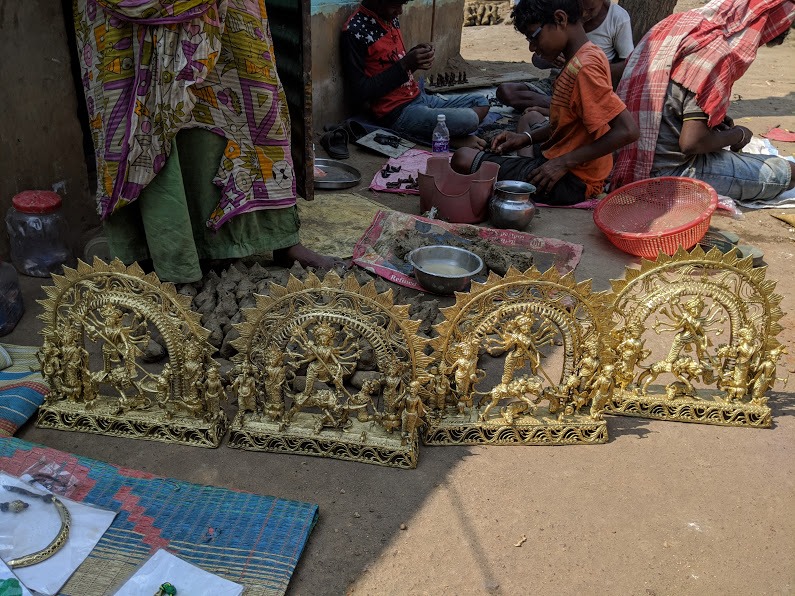
The next day, we reached Bikna (Birbhum), a rural hub of traditional metal art, Dokra. At the entrance of the village was a very friendly and pleasant lady selling tea and chaafee (chai and coffee mix). After recharging ourselves with her servings and her greetings, we headed into the village, where sparkling metalwork was strewned on the ground or kept on small tables outside the artisans’ houses. Every house was busy processing the clay, making moulds, preparing the moulds with wax and wire, firing those in the furnace, and then finishing the final products. I stopped at the houses to watch the artisans at work, spoke to the artisans, and enjoyed looking at all the products displayed for sale. Men and women were engaged with both craft and household work at the same time which gave the sense of a comforting balance in what they do; the essence being that their handicraft is an integral part of their lifestyle. I met many other visitors in the village, now that it is well promoted as an artisan hub for tourists!
Our next destination was Purulia, which is a land of adventure, nature tourism, and the mesmerizing folk dance Chhau (an acrobatic mask dance mainly themed on mythologial stories). I remember my first exposure to Chhau in 2006 when I travelled with my colleagues (from banglanatak dot com) to a place called Deul Ghata in Garhjoypur as part of work. Once we reached, late at night, a show had been organized on the bank of Kansai river; there was a bonfire made (as it was winter and immensely cold), and the Chhau Pala was performed around it. It was pitch dark and we saw the vigorous, colourful, and captivating dance in the light of the fire accompanied by the deep sounds of the percussion instruments played during the dance! Over time and with support towards revival and revitalization of this form for urban and international audience, today there are many more professional groups in different pockets (such as Balarampur, Bamnia, Bagmundi) that one could enjoy.
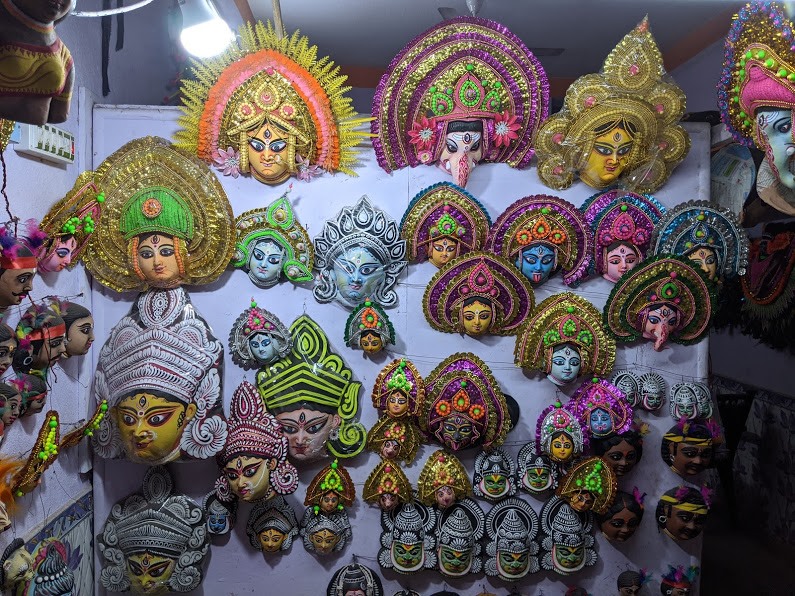
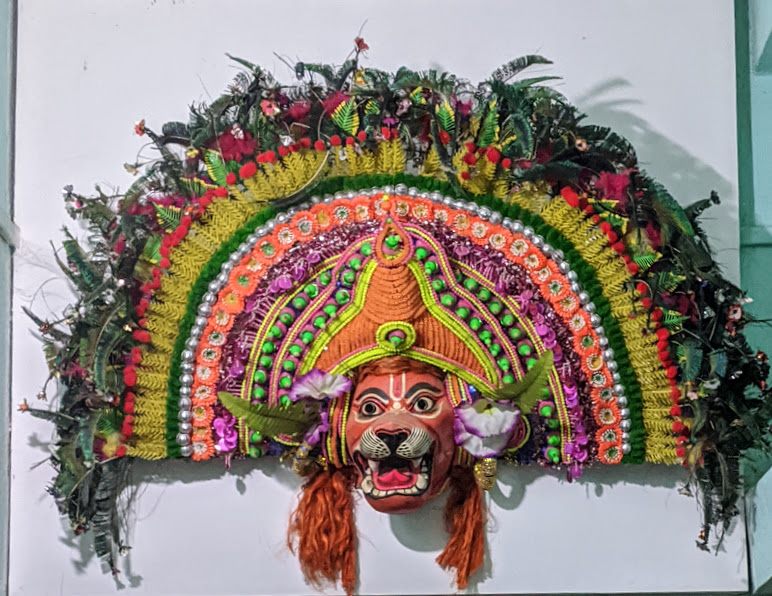
Charida in Purulia, the village of mask makers for Chhau dance, was our next stop. Traditionally this community used to earn their livelihood from making Chhau dance masks for the local performances. Their work was seasonal, linked to the Chhau performances, and they were essentially a sub-industry of this performing art. No one thought of them as skilled artisans solely by virtue of their unique craftsmanship. Banglanatak dot com had done substantial work with them to create a separate identity for their skills and train them to diversify their markets. The village mostly developed organically after initial interventions, and today it is a known hub of mask makers. All the porches of these artisans’ houses are workshops of mask making from where they also sell. The entire street looks stunning with these masks of bright colours hung in and outside every workshop with benches outside for anyone to sit and watch the artisans at work and buy masks. As I walked along the street stopping at each workshop and looking at their work, the artisans (some old faces and some new) shared that tourists and customers come every day to visit them and buy masks and they are very busy with work throughout the year! It was a colourful, high spirited, happy street with men and women either moulding or painting masks.

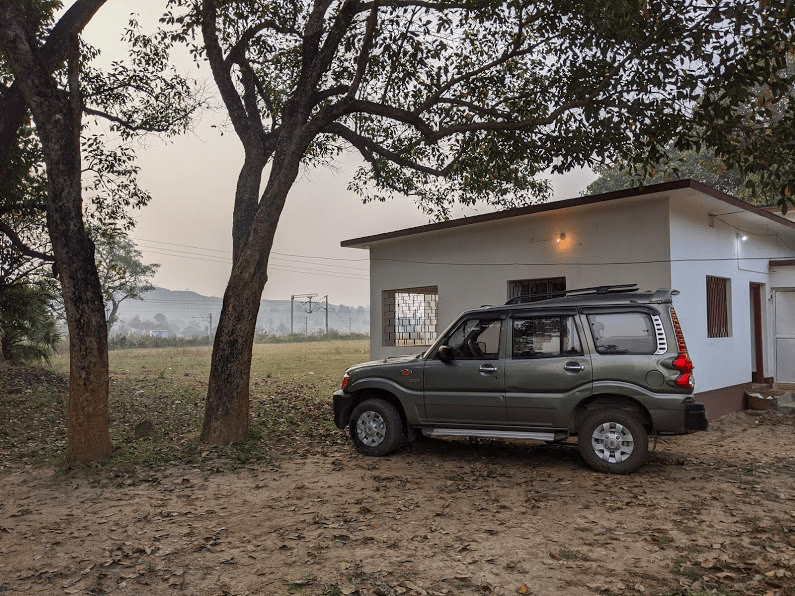
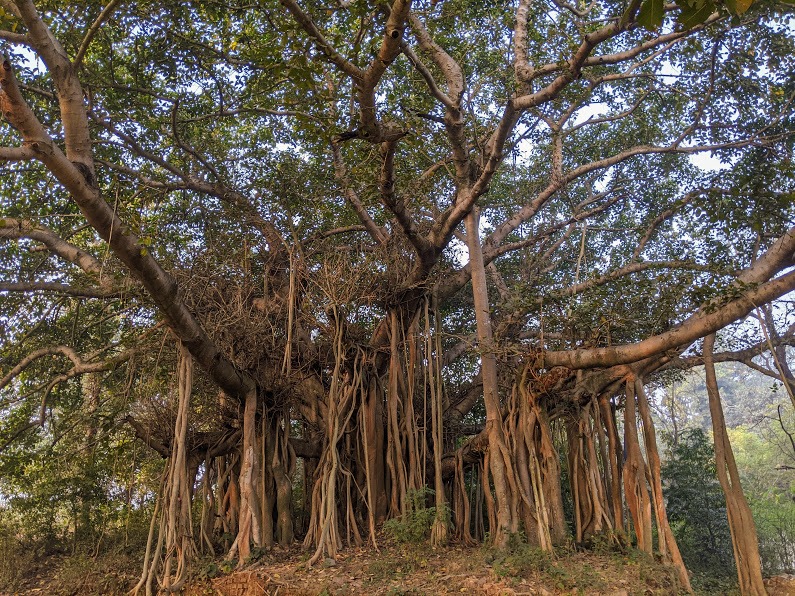
After a tiring but satisfying day, we went to a place called Nimdih where our night stay was arranged. At night I could not figure out the place much but it felt like we are in the lap of nature and the surroundings were peaceful. The big clear sky was filled with stars and shadows of huge trees gave an eery feeling. Early in the morning I discovered where I was. On one side of the small bungalow-like acommodation there was the Dalma hill range. On either side of the bungalow there were two great Banyan trees as if guarding the place for many many years. The campus (Gandhi Ashram established in 1948 by a local NGO, Lokasevayatan) was built on 65 acres of land full of trees, a pond, and a small area for organic farming. The place is being developed as an eco-tourism spot with small hutments and tents in addition to the small bungalow.
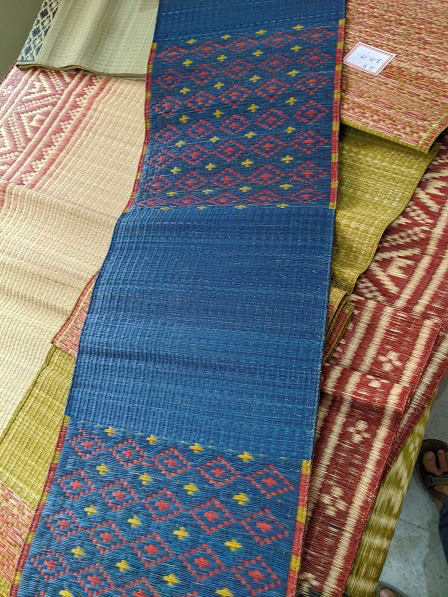
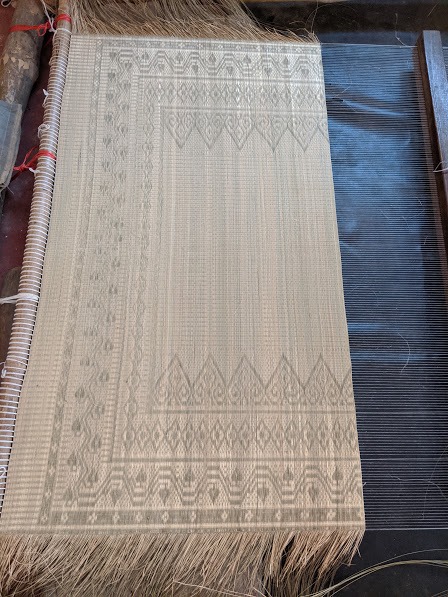
From Purulia, we took a train to come to Midnapore. This is tradtionally the place of natural fibre work (Madur) and Patachitra (scroll paintings). Our first stop was Sabang, the abode of the madur weavers. I met artisans busy with their production and orders, but also warm and friendly eager to show their process to visitors. It was an active cluster with national and state award winners, some of who also export regularly. There were madurs of various sizes and kinds; coarse ones woven with thicker reeds and the fine and delicate ones woven with thinner reeds (processed from the thicker ones). The designs ranged from sophisticated, rich traditional motifs to more modern ones and even village scenes and portraits of Tagore and Vivekananda. Products made with these reeds included bags, boxes, file holders, hats, which all looked attractive.
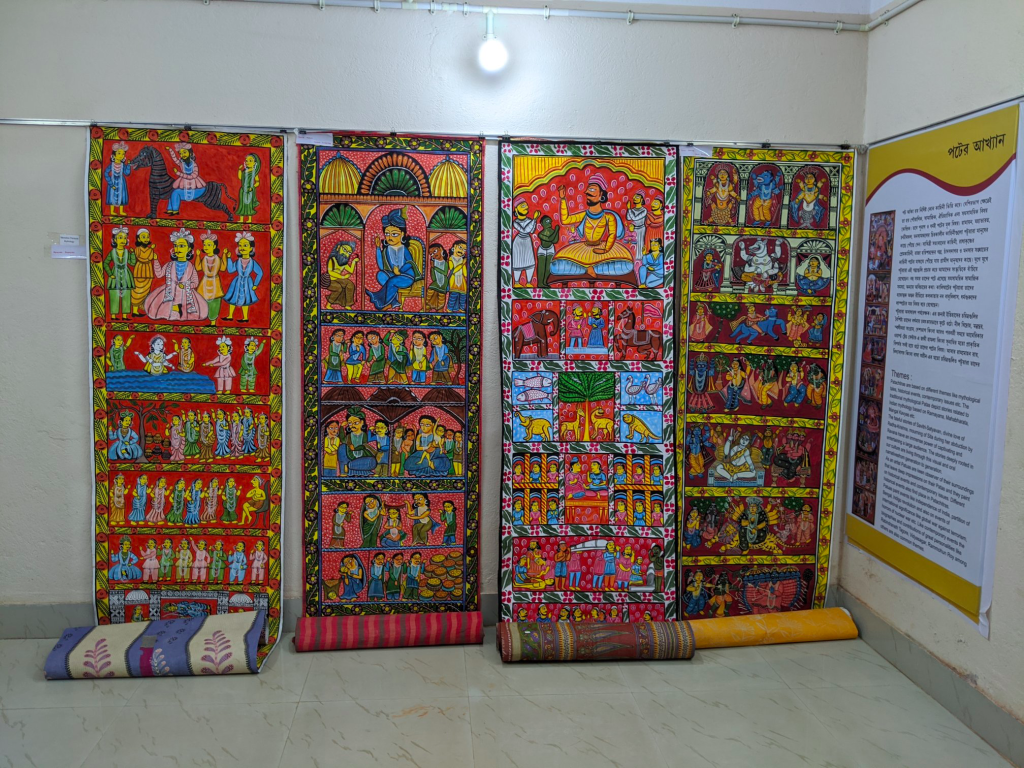
Our last stop was the Patachitra village of Pingla which is home to about 250 Patachitra artists (aka Patuas). I was specially interested in this village of scroll painters as I had worked with them during the initial days of banglanatak’s project. Since then I heard so much about their development, including the festivals they hold, how they have decorated the walls of their houses with paintings, how they have revived the art of natural colour making for painting, how Swarna Chitrakar, the woman leader and star of the village was instrumental in putting this village on the international tourist map, how they travel globally to not only exhibit but also train students in various universities, how they collaborate with artists visiting them and engage in art residencies, and how it has turned into a regular tourist destination. At the village while I was engrossed with the display in their resource centre, one of the artisans was pleasantly surprised to see me. He was Bahadur Chitrakar, a painter I had worked with. As we greeted each other I recollected an experience with him that I have always appreciated. In his first Goa trip for an exhibition in Kala Academy about ten years ago, he had a stall exhibiting his artwork just opposite the Academy’s Art Gallery. A wonderful exhibition of Mario Miranda was going on at that time, and Bahadur had shown interest in it. Being a fan of Mario myself, I had also encouraged him to go and see the exhibit. The next day I had found him sitting with a book on Mario’s work that was a good publication and looked costly. When I asked Bahadur about it, he said that he had bought the book with the money he earned in his exhibition so far, as he liked Mario’s work. I had been pleasantly surprised by his interest and effort to collect good art books. This time, he took me to his village house where he has made a very small museum and a library on his own, with a great collection of old books acquired from various places!
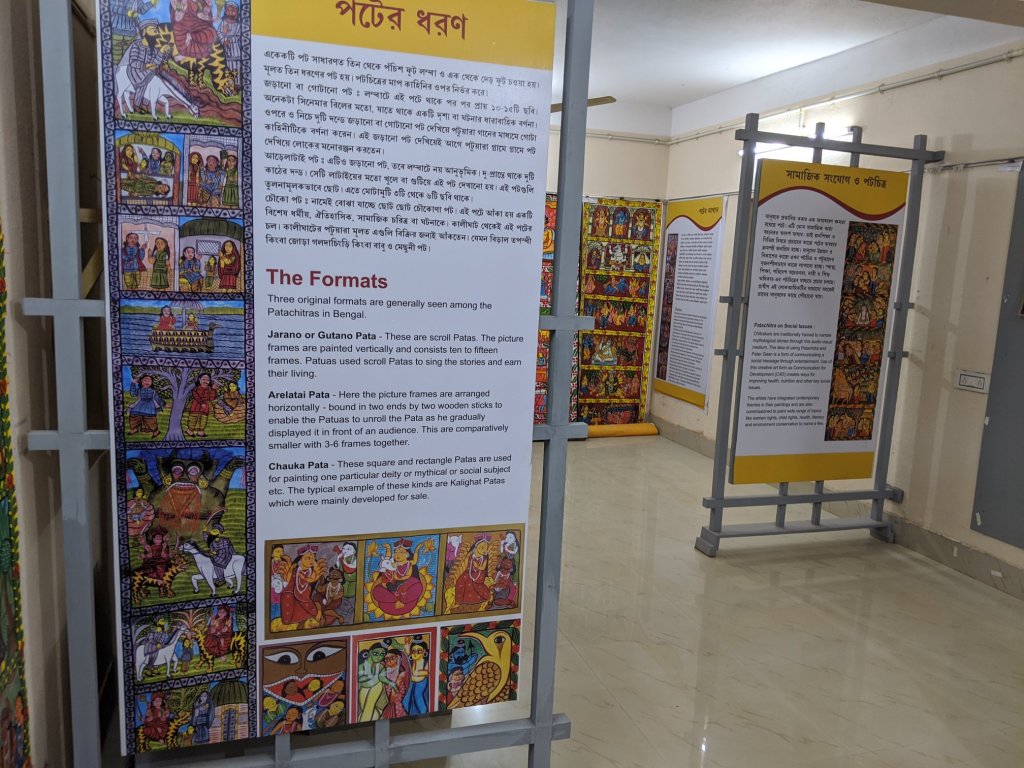
Although my visit was short and not during any specific event or festival, all these destintions hold annual village festivals between October to March. There are dfferent routes chalked out from Kolkata as well as the district towns for ease of any traveller, and tourists can chose cultural experiences of their interest. There are options of booking village stay in these places and every cultural hub has a Resource Centre carrying small exhibits about the history and development of these folk forms.
For me it was a refreshing and invigorating journey through the soft lush and occasionally rugged beauty and aura of rural Bengal and the delicious food that I often miss in Delhi!
Published in the Indian Express.
 Sunny Side Up
Reblogged this on Sunny Side Up.
LikeLike