
“Pictures hanging in a hallway
And a fragment of this song
Half-remembered names and faces
But to whom do they belong”
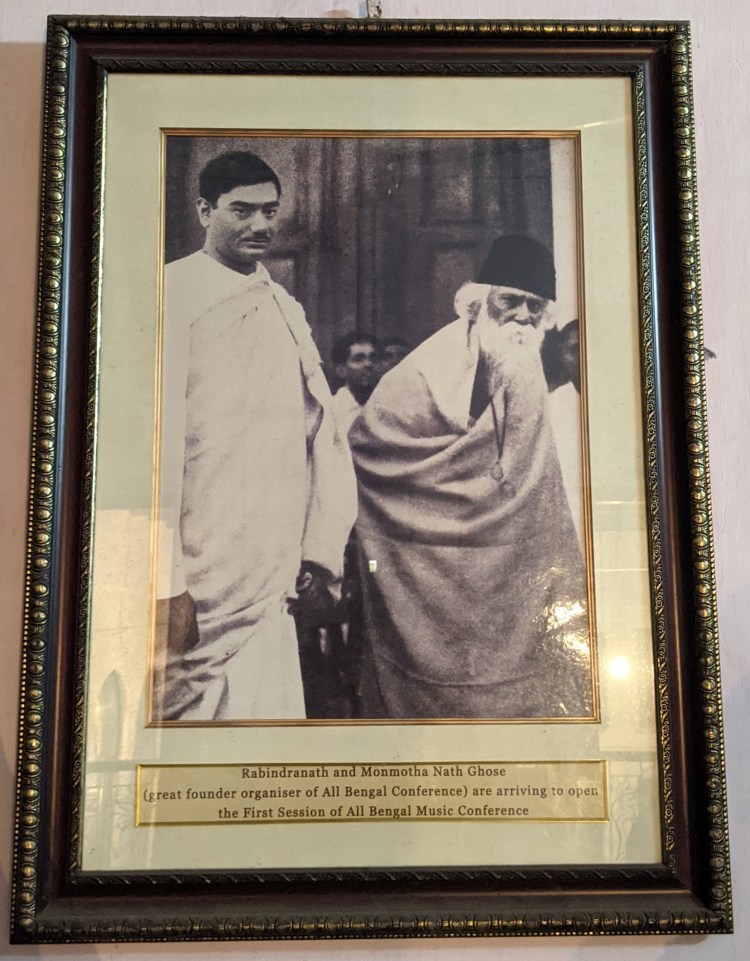
Of the many broken remnants and legacies of North Calcutta (about which I know very little), I had the privilege of visiting the old family house of the Ghoses at 46 Pathuriaghata Street recently, with a friend who is a daughter of this family. Among other contributions, this Ghose family started the iconic All Bengal Music Conference in 1937. Many legendary maestroes performed here, and Rabindranath Tagore came to inaugurate the first conference with Manmatha Nath Ghose (my friend’s grandfather), a patron of Hindustani classical music.

Specks of their illustrious past still echo from the mansion and its remains – paintings, photographs, marble top tables, checkered floors, courtyards, beautiful balconies, exotic mirrors, royal staircases, exquisite teak wood furnitures, chandeliers, the decorative cut-glass windows, the ‘thakur dalan’, and the memories of my friend and her brother (the current owner of the property).


Our chat over mutton chop and chicken cutlets from some famous local shop was spiced up by anecdotal accounts of the house, its affluence, and its unfortunate providence of abuse and plunder by the descendants of one of the in-laws from an earlier generation.
Stories became real as we entered their ‘Khajna Ghar‘ to witness the huge 200+ year old iron safe that was cut open with an oxyacetylene torch by the pillagers. The safe-door was so heavy that I could not pull it open by myself. My curiosity and overwhelming naivety led me to enquire more… “What all was in the safe? Money, jewellery…”. I was still putting together my imagination (from similar novels I have read through my childhood), when my friend’s brother exclaimed, “Gold, lots of gold, mohor from Akbar’s times…”! He turned to show me another cupboard, against the opposite wall, full of old silver items used mainly for ceremonies and Pujos. He said, “Well, they did not touch this cabinet as it amounted to nothing compared to the loot from the safe!” The room was strewn with other unkempt antiques which were silent testimonies to a lost opulence.
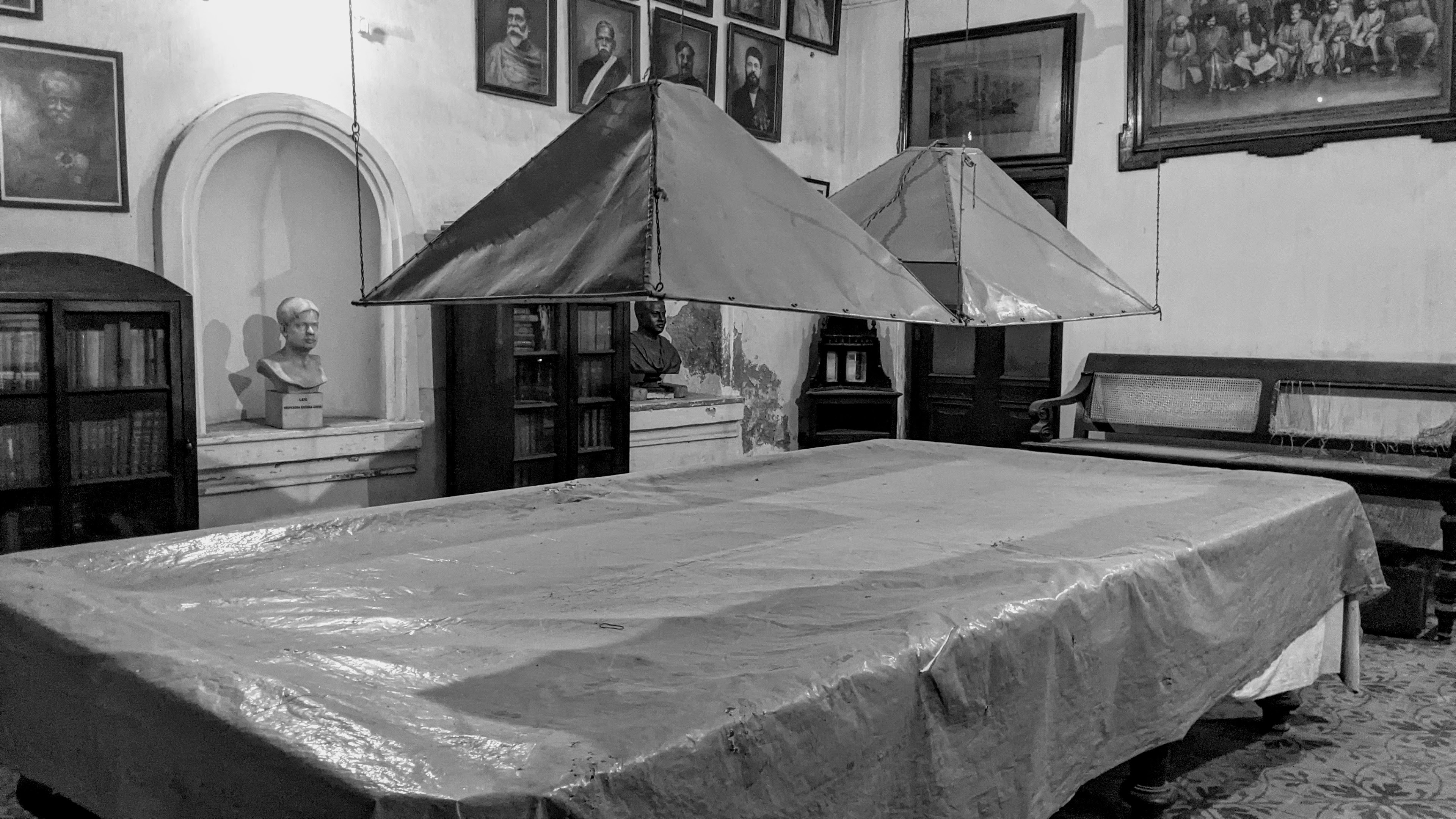
The billiard room had a huge billiard board, a billiard score keeping stand, high chairs on either side (presumably for the audience), antique lights, and photographs and paintings. The long windows of this room opened to the ‘thakur dalan‘ and gave the sense of a different era.
There was the hall of music, where oil portraits of the great musicians who performed here were hung. In the centre was a huge photograph of Rabindranath Tagore with Manmatha Nath Ghose, arriving to launch the first All Bengal Music Conference.

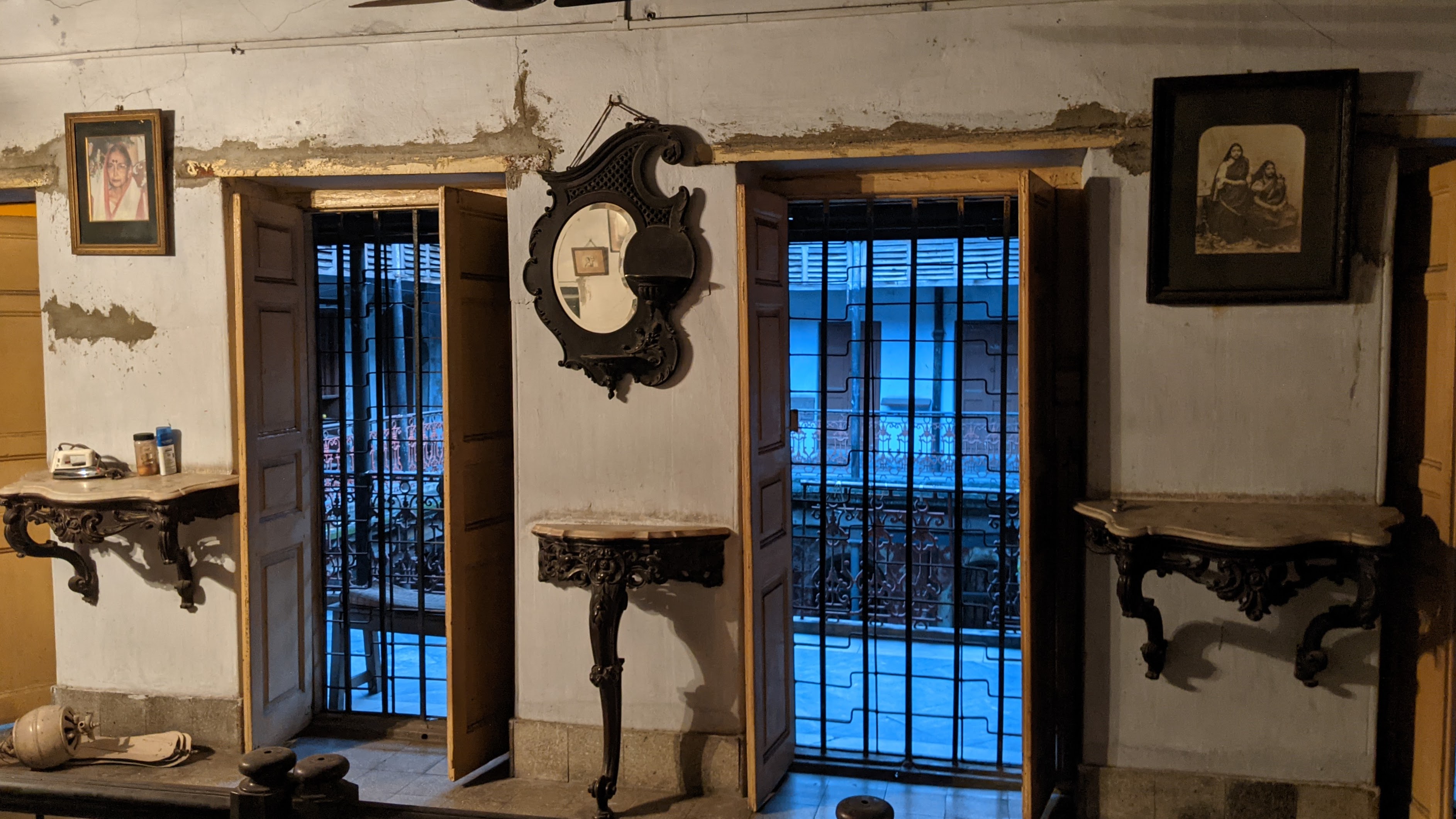
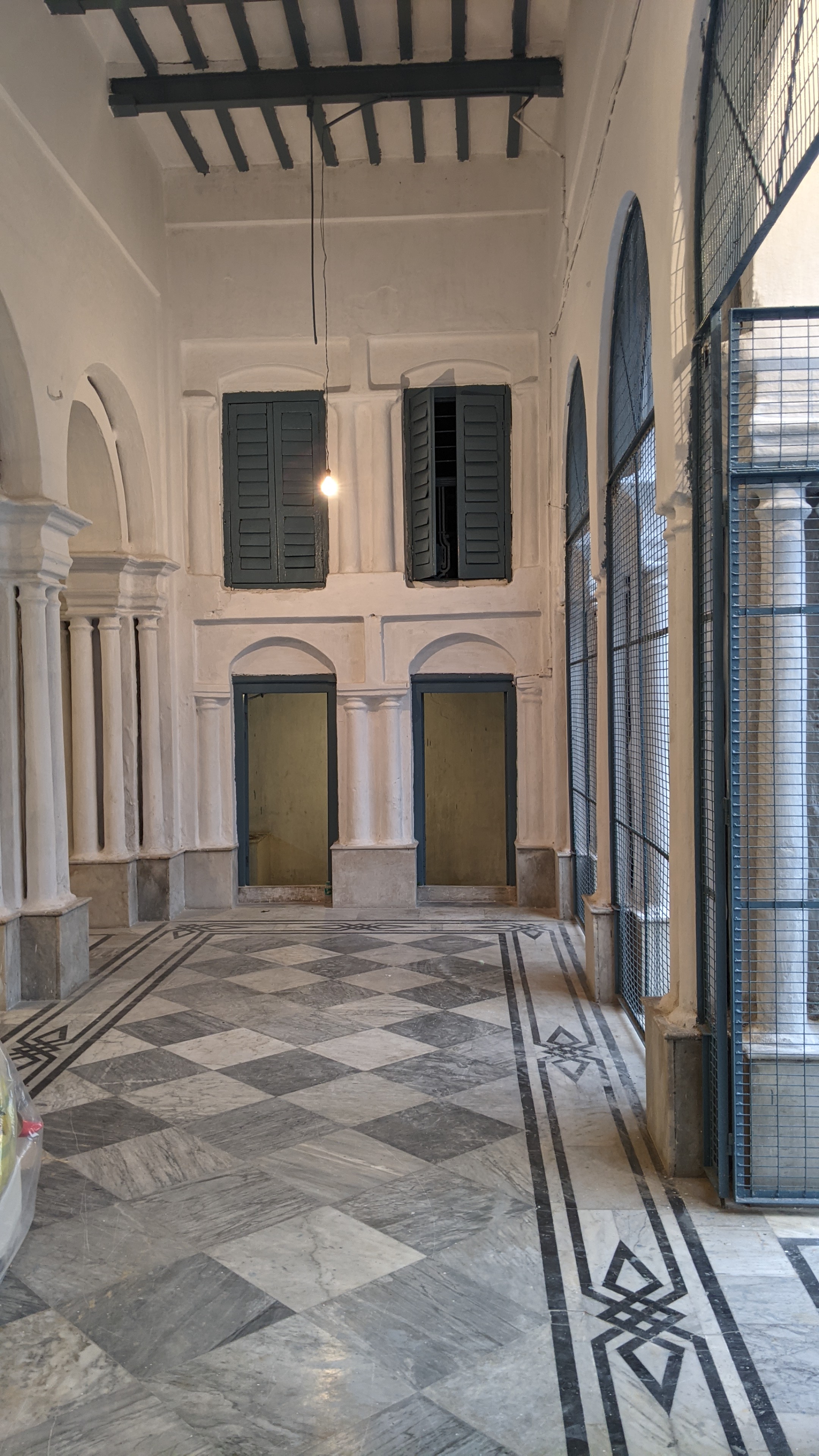

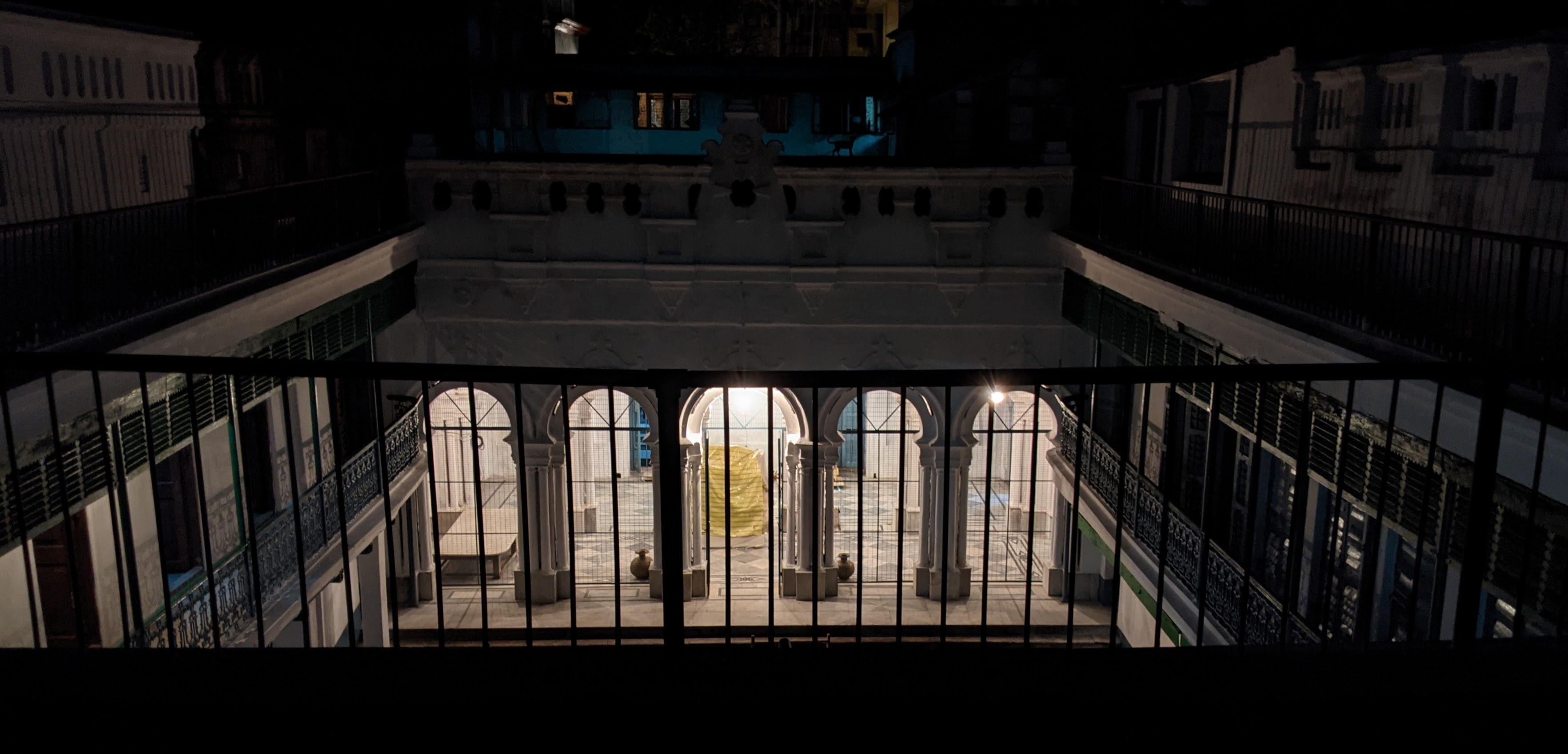
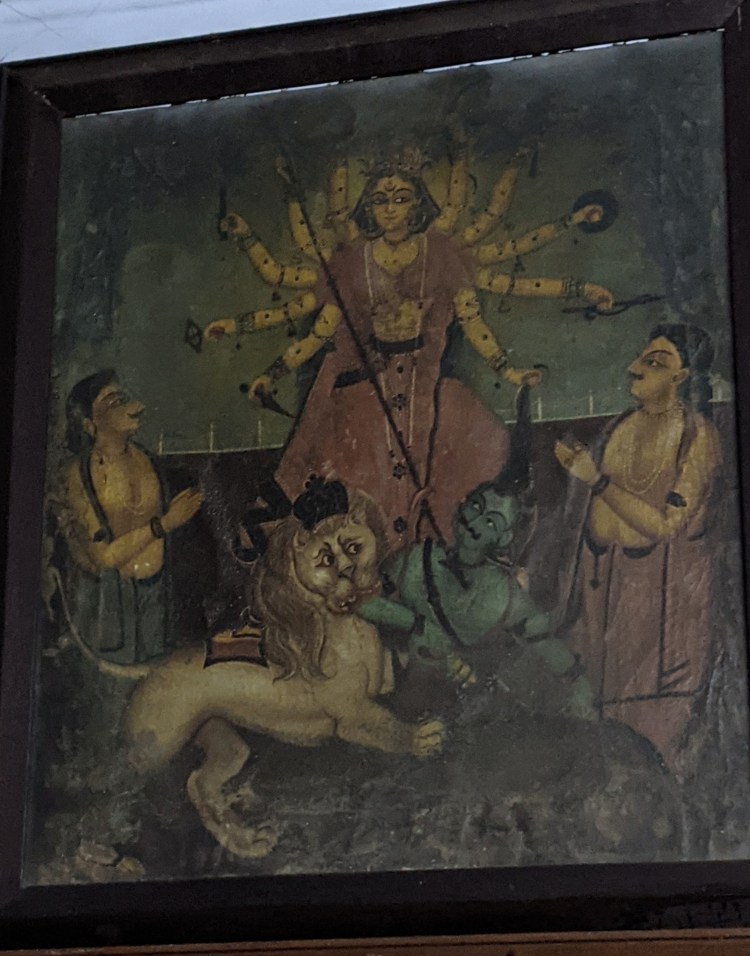
The terrace overlooking the thakur dalan was huge, and led to another portion of the house with cozy habitable rooms. Stunning paintings hung from the walls, mostly of Durga and her different manifestations, leaving me spellbound! The paintings were weathered through time but their timelessness showed in their artistry and colours. Though the painters are unknown (at least to us), and their identities are probably lost to history, in my opinion, they can challenge any gallery collection of folk paintings.

The day was Mahalaya, and the house was being prepared for Durga Pujo.
 Sunny Side Up
https://citytourkolkata.com/pathuriaghata-walk-kolkata/
LikeLike