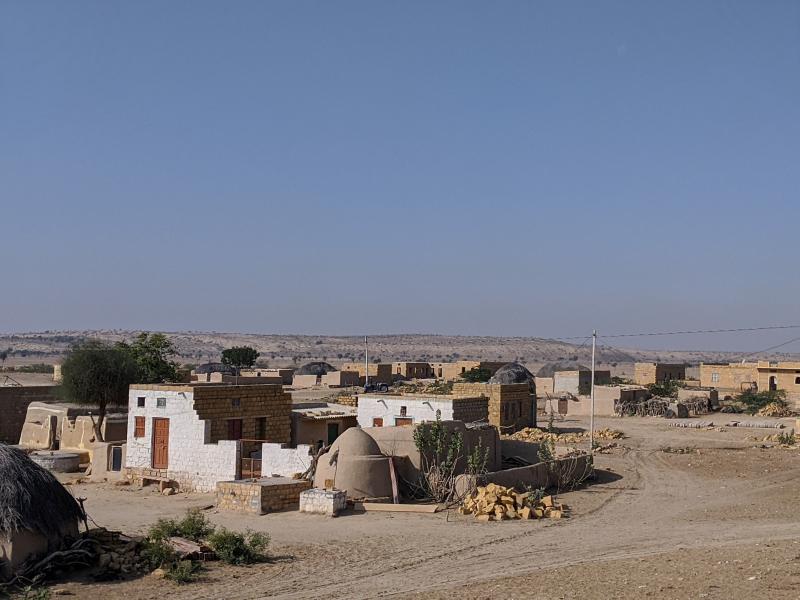
The unforeseen global pandemic of Covid-19 is an unprecedented situation with long term hard- hitting impact on life and living. The lockdowns, the fear, and the uncertainty are evoking different types of survival responses from different sections of people every day. Discussions abound on proper physical and emotional well-being, good governance, positivity and humane support towards each other, starting from the family to the global communities. At the same time, this pervasive crippling of mankind has also raised consciousness about the fundamentals of sustainability and economic, social and emotional resilience. Responsible living, happiness, creativity, and local action are increasingly coming up in many ways. As global leaders are busy identifying key challenges and finding solutions to the difficult problems ahead, at a micro level, individuals are seeking day-to-day respite from life in isolation. Thanks to the internet and social media, the world is still connected.
In my world of work, connecting with rural artisans and artists from across India has always been important, because we work with them to develop, sustain and professionalize their traditional cultural skills. A few days ago, when I called to catch up with a kantha artisan in a remote village of Birbhum in West Bengal, she was happy to hear my voice but also concerned about how I was doing. She asked me how I was and whether I am safe. When I enquired about her situation, she confidently asserted that they are much better off as they have their village house, open spaces, and some agricultural land where they grow basic vegetables. They live in a community and are supporting each other with whatever local resources they have. Even with no income, they can survive better than us, the urban people. This actually gave me a fresh insight. I decided to delve deeper into the minds of these rural artisans to learn more about their thoughts and how they are surviving, what it is that they are holding on to, and how they are coping.
Over the next few days, I decided to interact with rural folk musicians and singers of Western Rajasthan, with whom we also work to promote and create sustainable village-based livelihood through cultural tourism. Among these artists are Manganiyar and Langa singers. Manganiyars sing on nature, human life cycle, epics, ballads, daily life, etc. Their rendition of soulful music ranging from Sufiyana Kalams to Bhajans and Qawwalis along with their iconic chordophobic instrument Khamaicha are known around the world. The Langas sing Sufiyana Kalams, folklores and on different phases of life. They play a wide variety of instruments such as Sindhi Sarangi, Shahnai, Algoza, Khartal and Morchang. Some of these singers are very renowned, rich and famous and have travelled the world, but most are not; although many individual iconic performers have emerged from these communities, their villages mostly remain mostly in oblivion.
When our work with them got stalled, we decided to use social media platforms to keep them connected. Through the Facebook page of MusiCal (@bncmusical), an initiative of my organization banglanatak dot com, these rural artists were brought in to perform live from their villages in a coordinated and professional manner at designated daily programme slots which were pre-advertised on the page, for which they were also paid. The performers appeared online at designated hours, all decked up, with mindfully chosen beautiful desert settings as their backdrops to perform. Soon this platform became popular, being shared and reshared not only by urban audiences but also within their own community across various parts of Rajasthan. All the artists performed in groups of musicians and singers, with their traditional instruments, some of which are completely new experiences for many audiences. Colleagues, friends, friends of friends started connecting, commenting and liking, building a network of hundreds across the world.
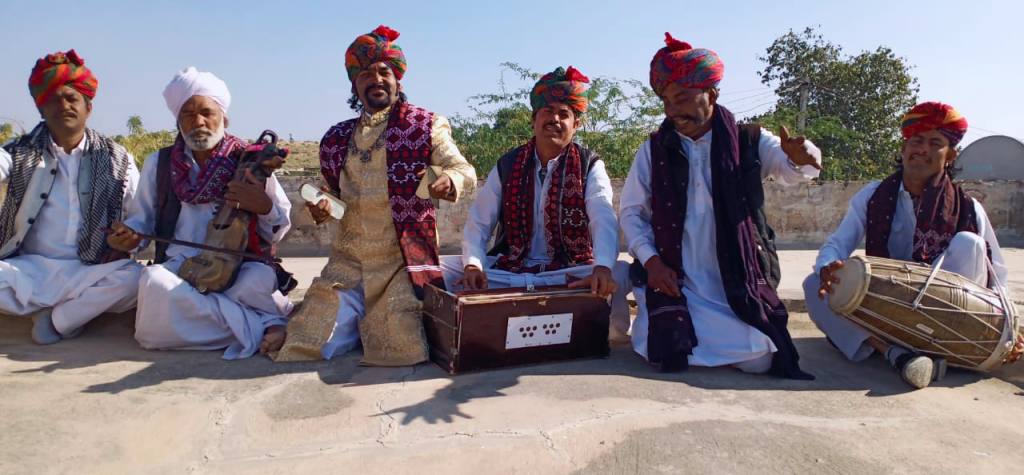
Just as I enjoyed listening to their music and songs, I also enjoyed talking to the performers, hearing what they had to say about their experiences. Most of them echoed the feeling that they are in a relatively better condition because they can move around inside the village, have community support and have access to basic food items that they themselves grow. There is no police around and no violence. However, they were also apprehensive about the tough times that are coming, as the season changes to adverse dry summer when cultivation becomes increasingly difficult. They shared that although their livelihood has been severely affected because travelling is integral to their work, so is the condition of the entire world with which they empathise and share pain.
When I asked them how they felt about their live online programmes, each had something interesting to say. Some of the younger artists were excited to be able to perform online and reach out to hundreds of listeners even during these times of lockdown. For some, this was a first- of -a -kind experience, doing a choreographed online event from their village homes, and they appreciated the efforts of my colleagues who painstakingly explained to them each and every detail of recording such live programmes. For some of the elderly performers — fathers and grandfathers of the more technology-savvy young singers— the virtual world and its nuances did not seem to have sunk in much; they were just happy that they were invited to perform, even if there was no real audience in front of them! They were told that amidst death and disease (‘ashubh ghari’, ‘kathin samay’ in their words), there will be people listening to them from somewhere behind the palm sized mobile screens, and so they carefully chose their songs and raagas. They sang about birth and life, about goodness and blessings; about loved ones who are waiting to return to each other, about calling the almighty who exists everywhere and is the world’s saviour. As they spoke about the power of the Almighty which manifests in nature, its neglect by mankind, and nature taking back control to protect earth, they kept referring back to the lyrics of these songs: “Har dil mein basta tu, har rang me tu hi tu…”, etc. There were a few who emphasized a feeling of being connected to other artists, singers, musicians and friends, both old and new, who have heard their programme and have called or written to applaud them. They said that even when they are physically miles apart, they feel closer to each other through interactions and musical exchange, which is giving them some positive energy to cope with present uncertainty and secluded life. In their words, “humein lag raha hai hamare sath koi hai”, “sannata nehi hai, sab nazdeek aa gaye”, “jhum gaye sab”, etc. They harped on the confluence of music and singers of different languages and culture, from different parts of Rajasthan and Bengal (also a part of this initiative), and how each is inspiring the other by reaching out with their own melody and songs, even during the lockdown. According to them, music is giving them the strength and encouragement to not lose hope. Some of the lesser known and newer artists felt a sense of achievement as they sang on the same digital platform where renowned, senior and even Padmashree awardee artists also performed. When they found some of the Gurus of these musical forms, who otherwise remain extremely busy with their travels and programmes, listening to them, and dropping appreciative comments, they felt happy, encouraged and fulfilled! They kept telling me, “Dil khush ho gaya’! The Gurus and masters expressed their joy of watching artists from interiors of rural Rajasthan performing together with their family members, sons and even grandsons, who have learned to sing even before they learned to speak, as children.
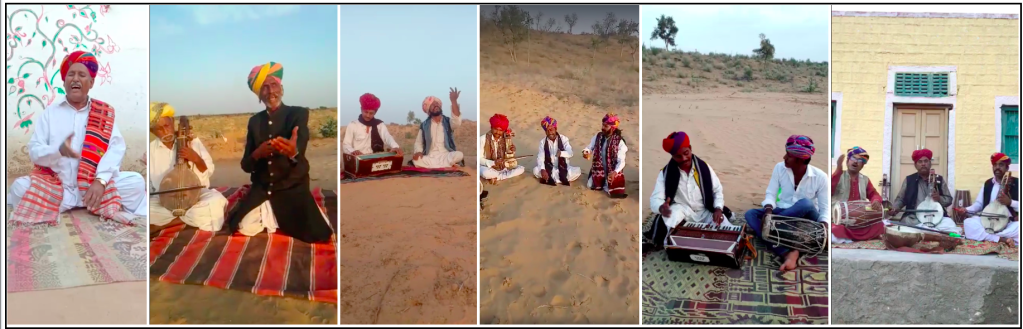
On a more spiritual note which is integral to their music, they talked about one God, brotherhood, humanity, friendship and caring for each other. They worship their music which gives them collective power, strength and faith to fight adversity on one hand and derive immense joy from living on the other. The richness of their cultural capital is known to the world, but how it builds their emotional capital in dire straits was something worth learning about.
 Sunny Side Up
Hi Madhura,
It’s such treat to listen to Folk musicians and thanks to Bangla Natak and you to connect them to the world which is going through this silence. The silence which we never witnessed, overpowered with traffic sound and machines. Music connects the world, music connects souls.
Keep writing and keep sharing your travelogues.
Best wishes,
Vj
LikeLiked by 1 person