
I have been visiting Benares for work since 2014, and unlike many others, the idea of going there for leisure was not particularly exciting for me. I used to work with handloom weavers staying in villages around Benaras, and visit our local office which was in the heart of the city. For my work visits, I had to stay somewhere centrally located so that I could reach our office or our fields quickly. I did visit the ghaats a number of times, saw the evening aarti in Dashashwamedh Ghaat, and also took boat rides on the Ganges. But those were quick visits, and the anxiety of wading through the extreme chaos of Godhulia had a much stronger impact on my mind than the ghaat experience itself! Although I loved the street food of Benaras, the chaats, thandai, kulfi and malaio (a winter speciality), I was quite disappointed with the infrastructure and civic sense of the city! I remember that once, while meeting with the Secretary of the City Municipality Chairman who was trying to convince me about their great initiatives for beautification of the ghaats, I told him that the city infrastructure was poor and needed more urgent attention!
Nonetheless, Benares is undoubtedly a romantically charming place, and its flow of life does reflect its history, mythology, culture, royalty, and the cycle of life and death. And it was with the expectation of experiencing this that I agreed to accompany Deepayan to Benares for a short holiday. Our plans for this trip had actually started when one of Deepayan’s expat friends decided to visit Benares, in part to find out the current conditions of her childhood home. This idea of exploring her childhood home and reminiscing about her life there years ago attracted me the most, as I sincerely wanted to share her experience of ‘Hiraeth’, a feeling known to me and very close to my heart.
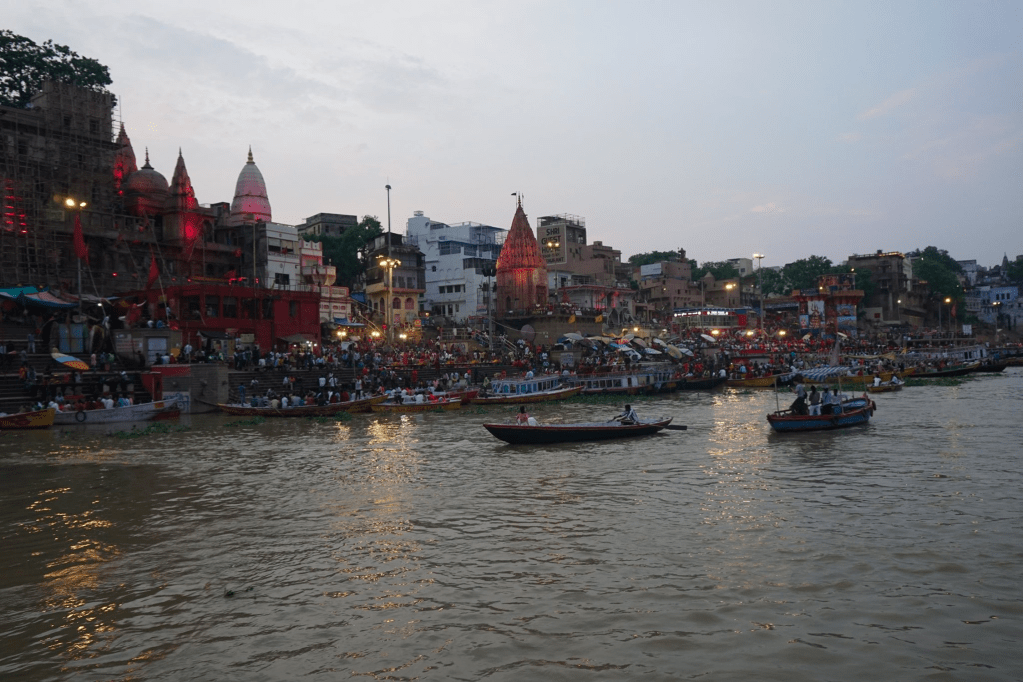
Following our friend, we booked a luxury hotel on the ghaat without looking into it very closely, as our primary goal was to enjoy each other’s company in a place away from home. We had known that she would be travelling with another friend of hers, but I did not pay much attention to our fourth team member until a couple of days before the trip; it turned out that she was also a friend of mine from high school. This was most delightful and we were all excited about seeing each other after many years.
Our place of stay, the Brij Rama Palace, was located on Munshi Ghaat, right next to Dashashwamedh ghaat, and was a former palace turned into a hotel. It was originally built in 1812 by the minister for the estate of Nagpur, Shridhara Narayana Munshi, after whom the ghaat is named. The palace was acquired by the king of Darbhanga in 1915, who renovated it and added more floors as well as an elevator, which was probably one of the first in India. The building eventually fell into disrepair, before being bought by the current owners in 1998. It took 18 years of restoration work to convert the erstwhile Darbhanga Palace into Brij Rama Palace.
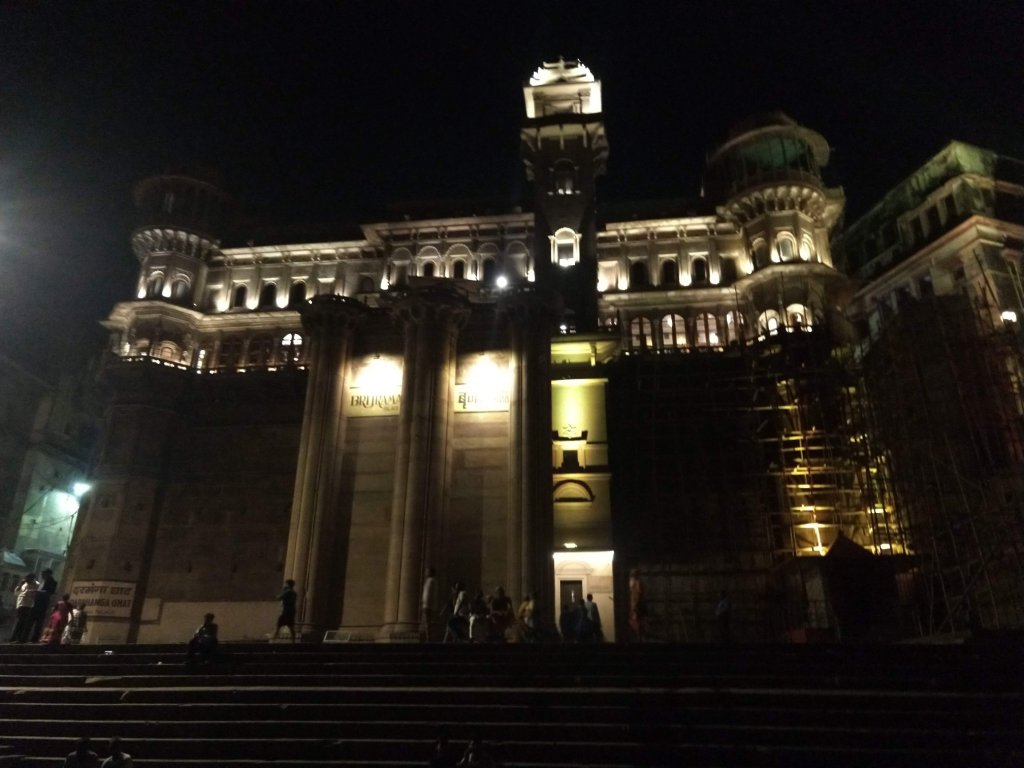


As a humorous aside, and perhaps as a commentary on my experience of working in Benares and dealing with the local communities, I feel compelled to add a conversation I later had with one of my colleagues who had spent a lot of time on our Benares project. When I told her that it had taken 18 years to renovate the hotel we were staying in, her immediate reaction was to lament that “everything takes so much time in Benares!”.
The Brij Rama Palace was a beautiful building with very tasteful aesthetics, expansive balconies overlooking the Ganges, and very friendly staff! The rooms were pretty, the decor was gorgeous and their package included breakfast, high tea, and a boat tour to see the ghaat aarti every evening! There were other chargeable services such as getting a priest for temple visits, etc.
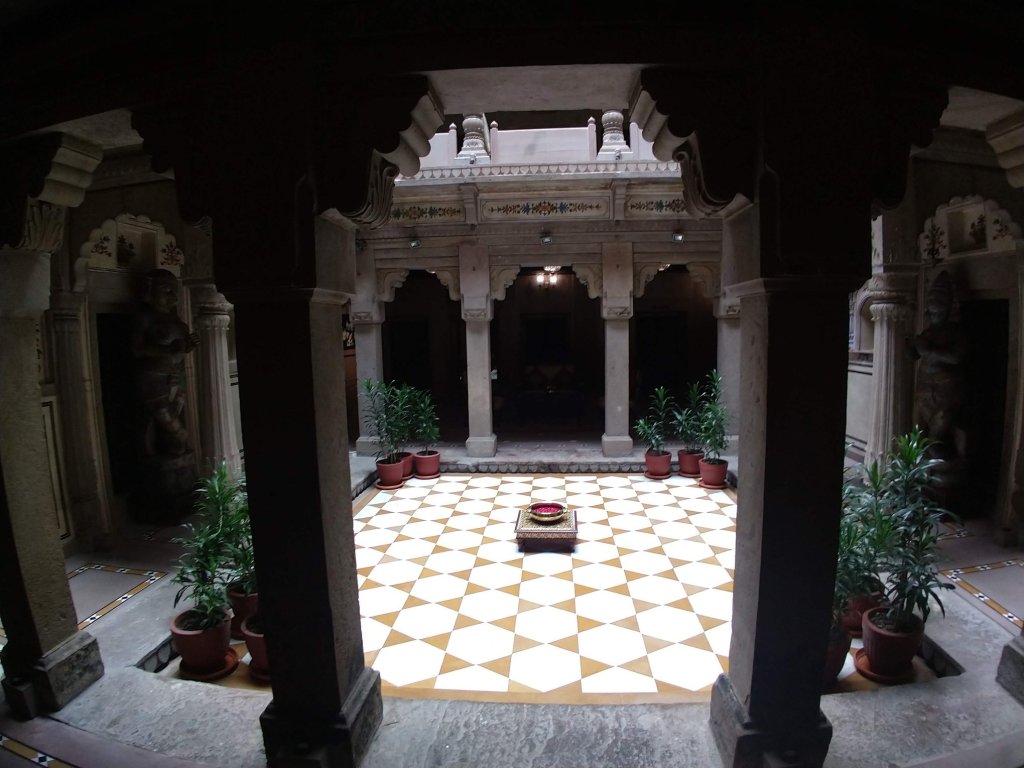
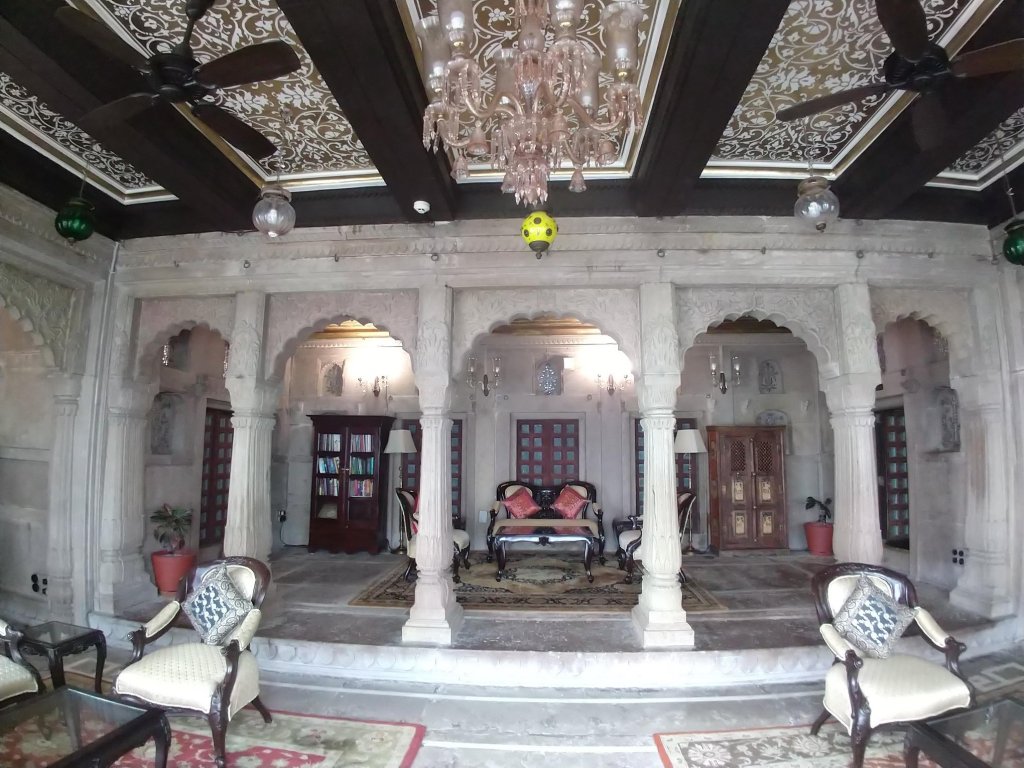
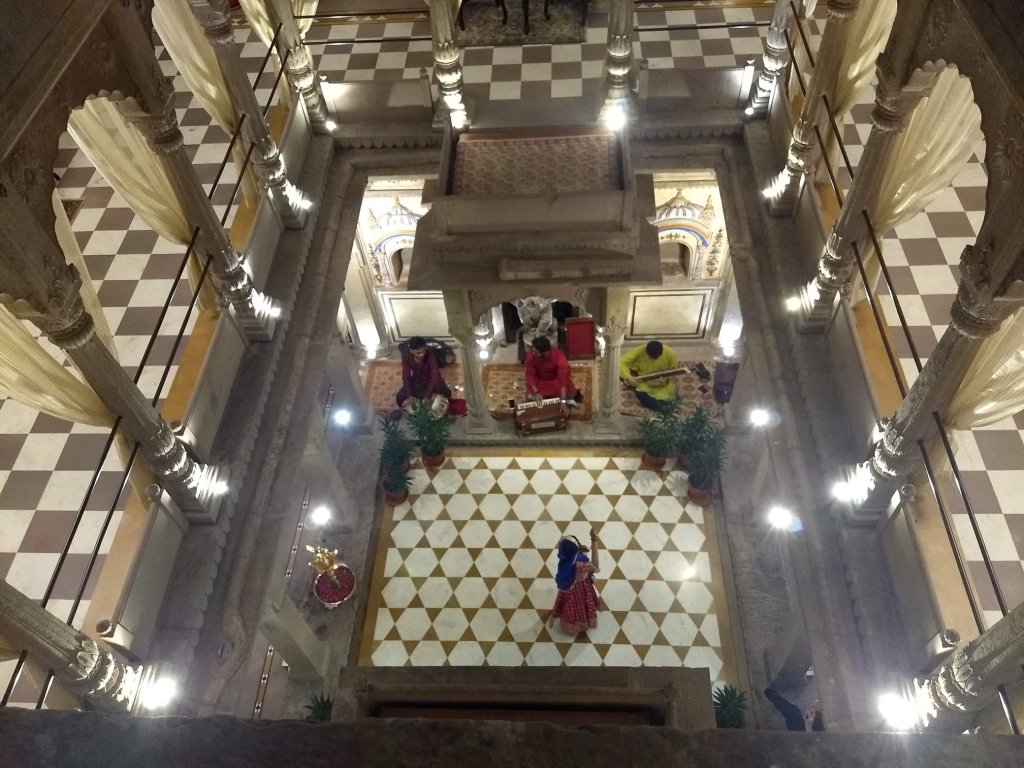


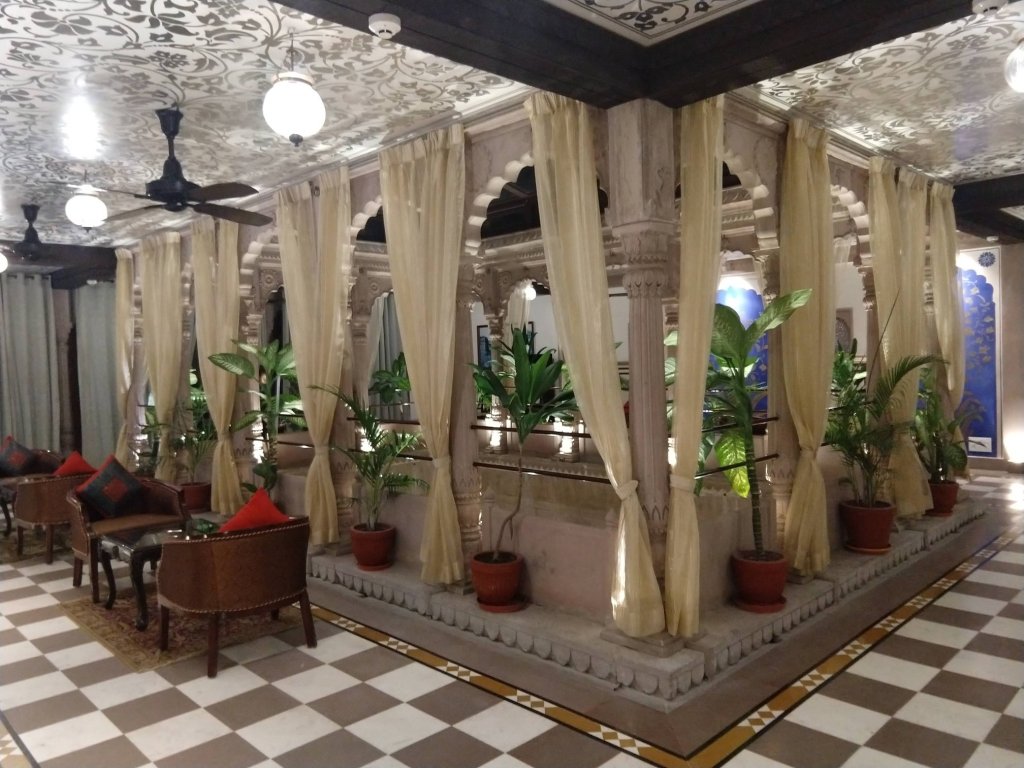
The hotel is not accessible by car. Their car service picked us from the airport to take us to Raaj Ghaat, where a boat was waiting for us. The staff helped us to get our luggage on board, and we had a lovely 15 minute boat ride to reach the Palace. The moment I reached Brij Rama Palace, I realised that I had crossed this building many times during my earlier boat rides on the Ganges, and remembered it as one I had always liked. In fact, I had a number of photographs of the edifice from before it had opened as a hotel in 2016. The excitement of knowing the structure from before stayed on as we got showered by the initial hospitality of the staff. As we started exploring the inside of the building we found interesting old staircases, paintings and a huge terrace. We noticed that the terrace and the balconies had wired fencing, and upon enquiring about the reason a guard at the terrace told us that these were meant to discourage monkeys who regularly run up and down the terrace and the balconies. In fact, he seemed happy that we raised this topic and elaborated on how much of a hassle it is for him alone to run after the monkeys jumping around on different floors and that he required more help!

The stay and meeting with old friends made our trip immensely fulfilling. We felt like free souls dedicated fully and unconditionally to the mystic life of Benares! Locating our friend’s childhood home (which did not belong to her family anymore) and taking a look around was a beautiful experience. The hilarious conversations with a local auto driver who drove us from there to Baati Chokha for lunch and back to Godhulia were thoroughly enjoyable: He had a single passenger, a middle aged local lady, when we met him on the road, and he promptly dumped her to take us on when he heard our destination (for some reason she didn’t seem to mind). Then he claimed that our destination was 15 kms away, when it was actually around 5, and insisted on taking the very narrow bylanes instead of the main roads, which thoroughly confused not only Google but even him on several occasions when he had to ask for directions!
The walk from Godhulia to Dashashwamedh ghaat, stopping at the famous roadside chaat shop to eat aloo chaat and kulfi while it rained heavily, buying umbrellas from a local shop, managing our way through the large number of Shiva worshippers who had flocked to Benares for the Shravan rituals, shopping for paan masala in the lanes leading to the Kashi Vishwanath temple, and getting drenched in the rain together were memorable moments that we will always cherish.
Deepayan’s visit to Benaras was more complete than mine because he accompanied his friend to the Kashi Vishwanath temple for Mangal Aarti, which starts around 3:00 AM. They left the hotel around 12:30 AM with a hotel-arranged priest to be able to get front-row seats to see the aarti. Deepayan, while completely oblivious to the protocols of the temple and ways of delivering offerings to the Gods, was nonetheless given the certificate of being good and patient company. Even so, Vishwanath and Kaal Bhairav and the innumerable gods of the land were possibly happier with them than the other two of us who spent the night sleeping! They got back to the hotel around 4:30 AM. The month of Shravan, being an especially auspicious time, added to our experience — the dark clouds, the frequent rains, the brimming Ganges, the cool breeze and the busy ghaats…. I loved Benaras this time, and hope to go back again for another magical experience!
 Sunny Side Up