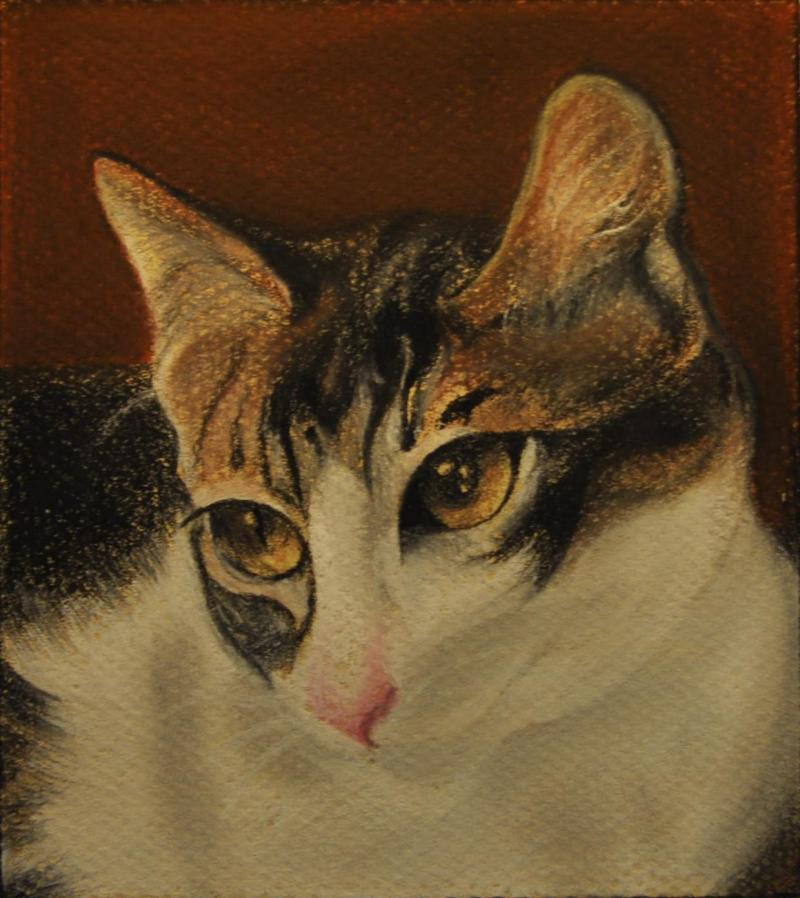
A colleague recently asked me, somewhat hesitantly, “Ma’m are you a cat person?” As I stared at her, she jumped to clarify, “I saw that your Gmail profile picture is a cat, that’s why I’m asking.” This time, I gave her an enthusiastic confirmation, before turning back to my work. Because regardless of rank or class, cat persons invariably identify with others of their kind and soon become part of a community sharing cat stories, images, quotes, cat behaviour, cat psychology, and how impressed they are with their own cats!
As a Bengali, I have grown up with some eternal divides that can generate instant debates: the divide between the Ghoti and Bangal, between ilish and chingri, between East Bengal and Mohun Bagan. The divide between dog people and cat people is, of course, more universal and natural, given their different personalities and the relationships they share with their humans.
My cat, Majantali, who was rescued from a pipe when he was a few months old, has been with us for over seven years now. A round ball of black-and-white-fur back then, he has grown to an impressive size, with smooth, silky long fur, that is rarely seen in these parts of the world. Through my college years, I had often nurtured street cats when they ventured into my house, but I have never had them for long. So, with Majantali as our full-time companion, we started learning new things about cats as he grew.
Needless to say, Majantali is a uniquely impressive cat (much like all other cats). He is named after the eponymous cat character in a well-known Bengali children’s story by Upendrakishore Raychaudhuri. Fortunately, he is nothing at all like his namesake, who was devious and oversmart , but is rather a friendly, innocent cat who displays no sense of threat when he meets either new humans or felines.

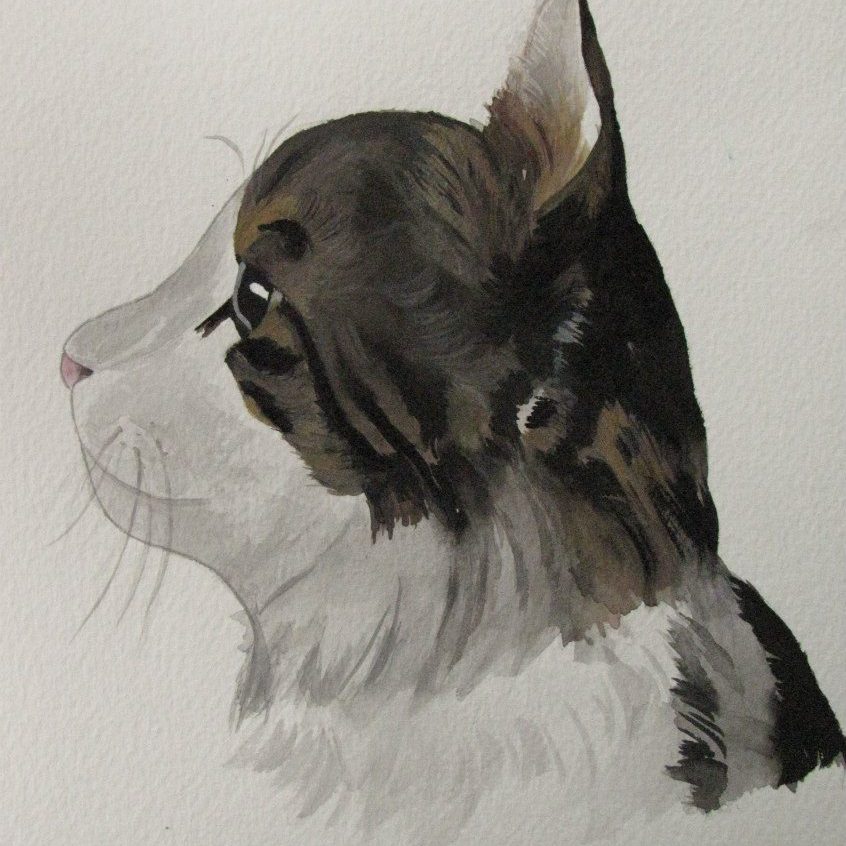
Apart from his clearly exotic heritage (some Egyptian mix, we think), Majantali is a typical cat. He sleeps all day, with short breaks in between, when he gets up for a stroll around the house and for meet-and-greet sessions on the terrace with other felines who often drop by. Should there be a laptop open on our study table, rest assured, Majantali will make himself comfortable on the keyboard.
He responds to everything we say to him in different tones of “meow” and loves to be around us. But, only he gets to decide when he wants a petting, and, at other times, he expresses his dislike when touched with a growl or a ‘phansh’. What he always likes is attention, especially from visitors. When our friends visit us, he sits on the centre table or occupies one of the chairs, and remains there throughout our adda sessions. If one of our friends fails to greet him or notice him, he finds an occasion to throw his considerable body weight at him/her as a friendly reminder of his existence.
As Majantali became a part of our lives, we started relating to descriptions and presentations of cats in literature and paintings, cartoons and illustrations. There is, of course, the Cheshire cat in ‘Alice in Wonderland’, Sukumar Ray’s red cat in ‘Ha Ja ba Ra La’ inspired by it, Hulo and Kaan Kata Neki in ‘Hulor Gaan’ (Abol Tabol), T. S. Eliot’s ‘Book of Practical Cats’ (featuring Macavity, the Mystery Cat among others) that inspired the popular Broadway musical ‘Cats’, Simon in Satyajit Ray’s uncanny short story, Ruskin Bond’s black cat, and so many more. Leela Majumdar devoted an entire chapter to her pet cat in ‘Kheror Khata’. Cats are indeed great subjects for their strong personalities and interesting postures, making appearances in the paintings and illustrations of many European artists of the 19th and 20th centuries such as Steinlen, as well as Indian painters and illustrators such as Jamini Ray and Debashish Deb. Cats have inspired many cartoonists as well. Bill Watterson’s Hobbes was inspired by his cat Sprite, and the more recent ‘Simon’s Cat’ animations and books by British artist Simon Tofield are, in fact, brilliant creations that make cat lovers fall in love with cats all over again! We also came to realise that a number of scientists, statesmen, and artists had feline companions, and found many interesting anecdotes about their relationships with their cats; how Einstein commiserated with his cat on rainy afternoons, how Churchill apologized to his cat for not being able to serve him cream during the war, and how Dali used to take his ocelot out to lunch in Manhattan restaurants.
Researchers have determined that cats develop a unique language with their human companions. I can confirm this from my own experience. Majantali and I understand each other perfectly, even though there are times when we do not agree. Those are the times when Majantali becomes grumpy or angry, and sulks in some corner of a room or under a sofa. To have some fun, he had once locked us up in our bedroom by moving the door latch with his paw. We had to call a friend to come and rescue us that day. Ever since, we have learned to be wary of his sense of humour. We have taken off all door latches and fixed them at a height where he can’t reach to avoid future disasters.
 Sunny Side Up